What actually happens inside your body when you consume cannabis? And why can two people experience the same product differently?
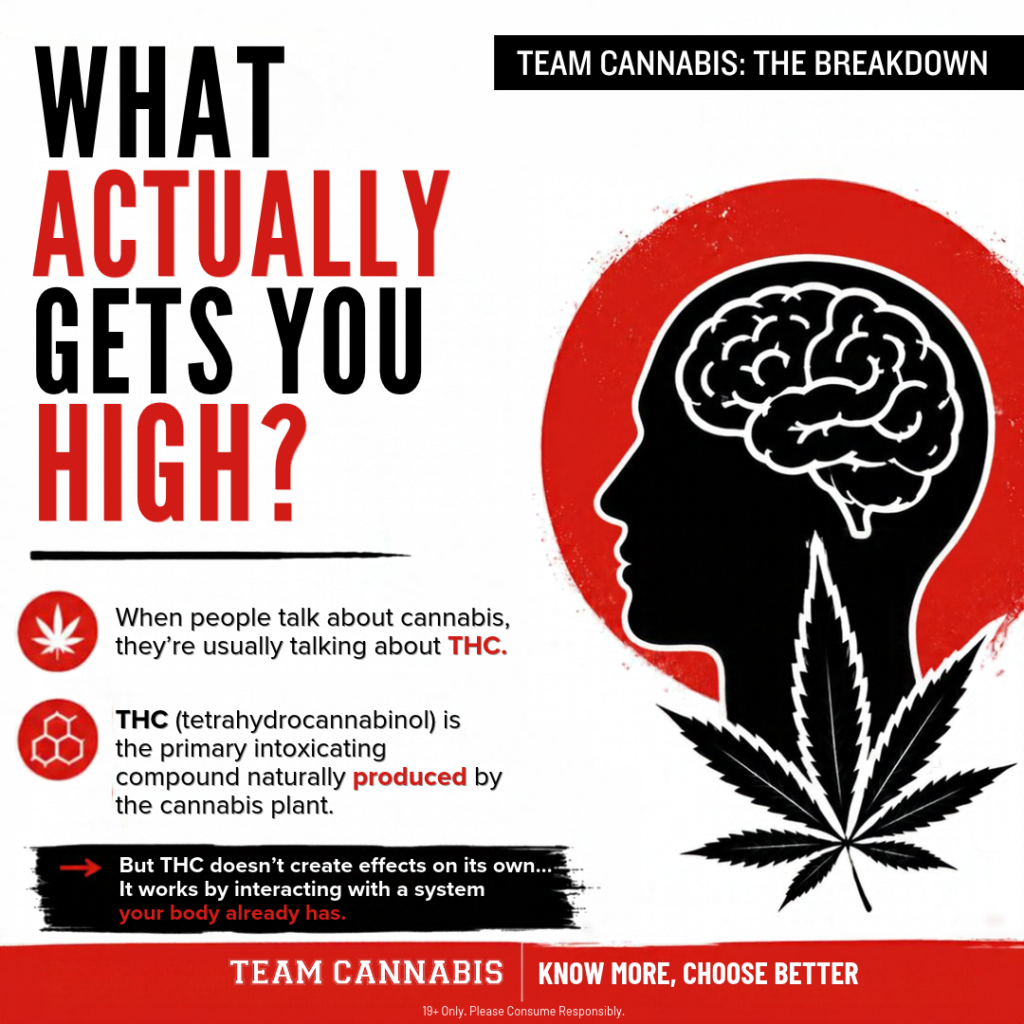
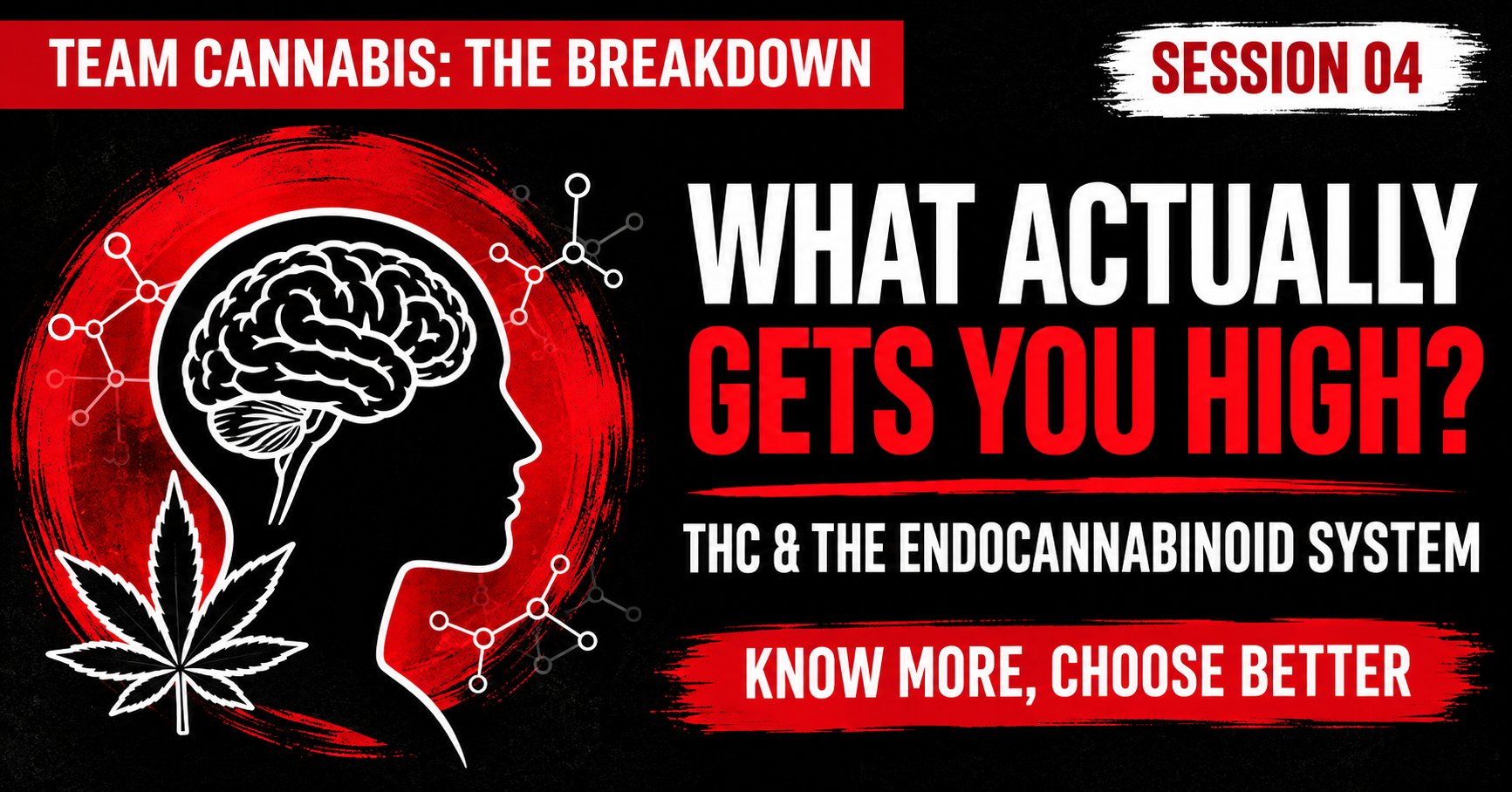
In Session #4 of The Breakdown, Team Cannabis explores the science behind THC and how it interacts with the human body.
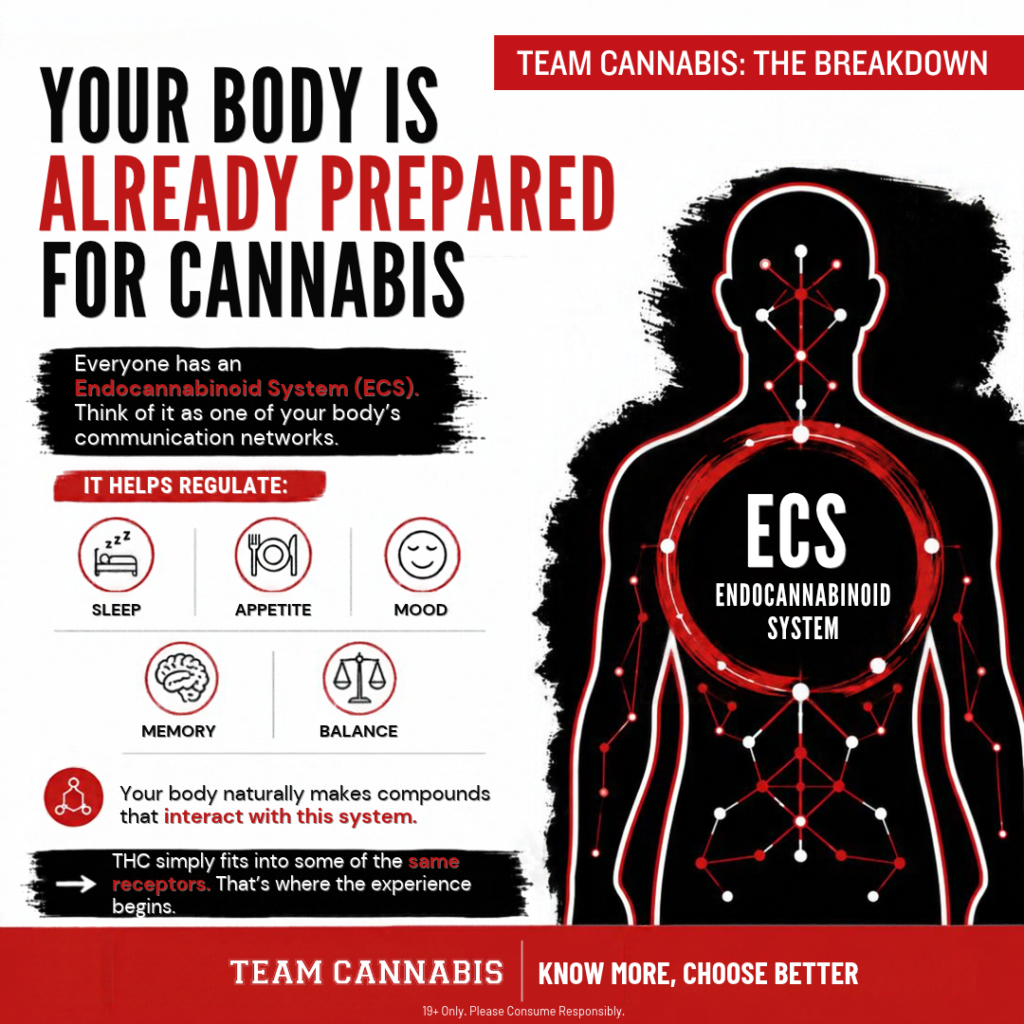
What is the endocannabinoid system?
The endocannabinoid system (ECS) is a naturally occurring biological communication network involved in regulating functions such as appetite, sleep, memory and mood.
Your body produces its own compounds, known as endocannabinoids, which interact with cannabinoid receptors.
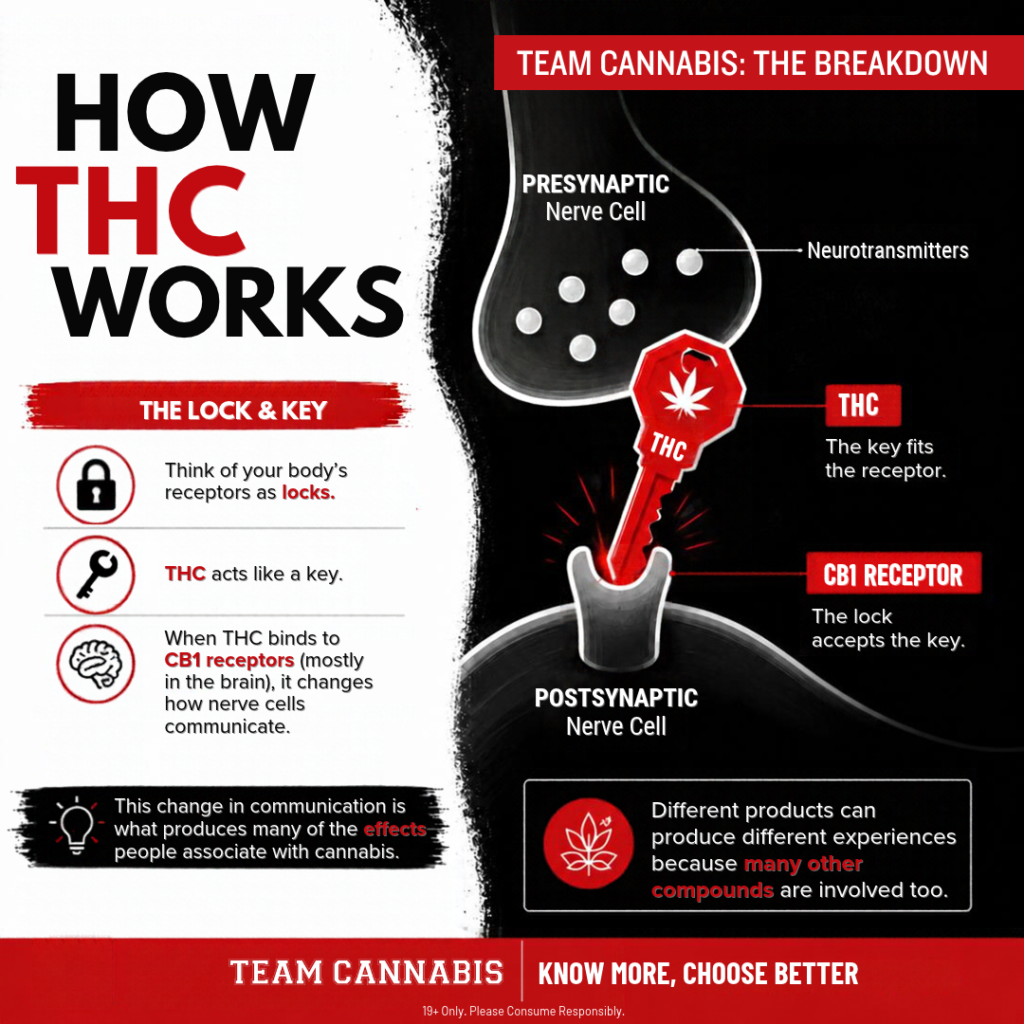
THC (tetrahydrocannabinol) also interacts with these receptors, particularly CB1 receptors in the brain. This changes how nerve cells communicate, contributing to the intoxicating effects associated with cannabis.
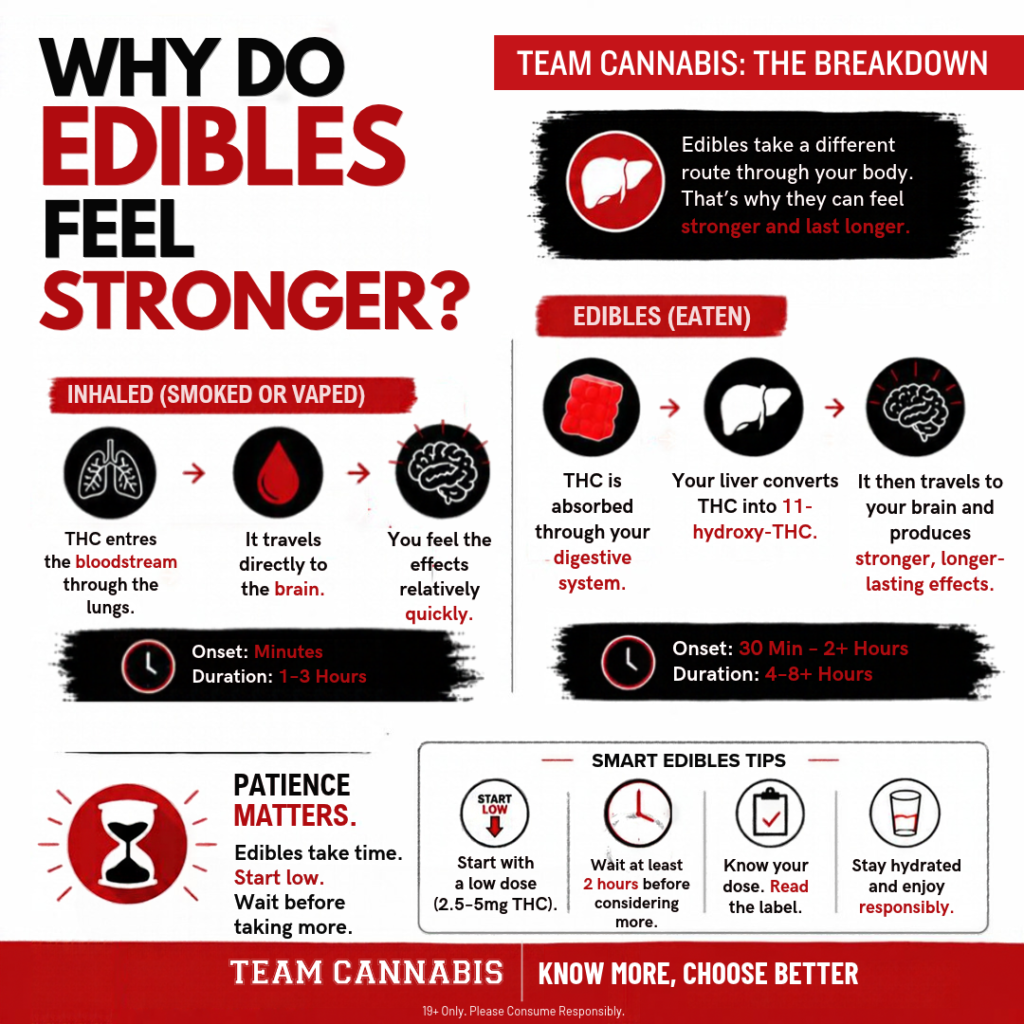
Why do cannabis edibles feel different?
Inhaled THC enters the bloodstream through the lungs, producing effects relatively quickly.
When cannabis is ingested, the liver converts some THC into an active metabolite called 11-hydroxy-THC. This helps explain why edibles can produce more intense and longer-lasting effects.
Edibles can take up to four hours to reach their full effects. Health Canada recommends starting with 2.5 mg of THC or less for inexperienced consumers.
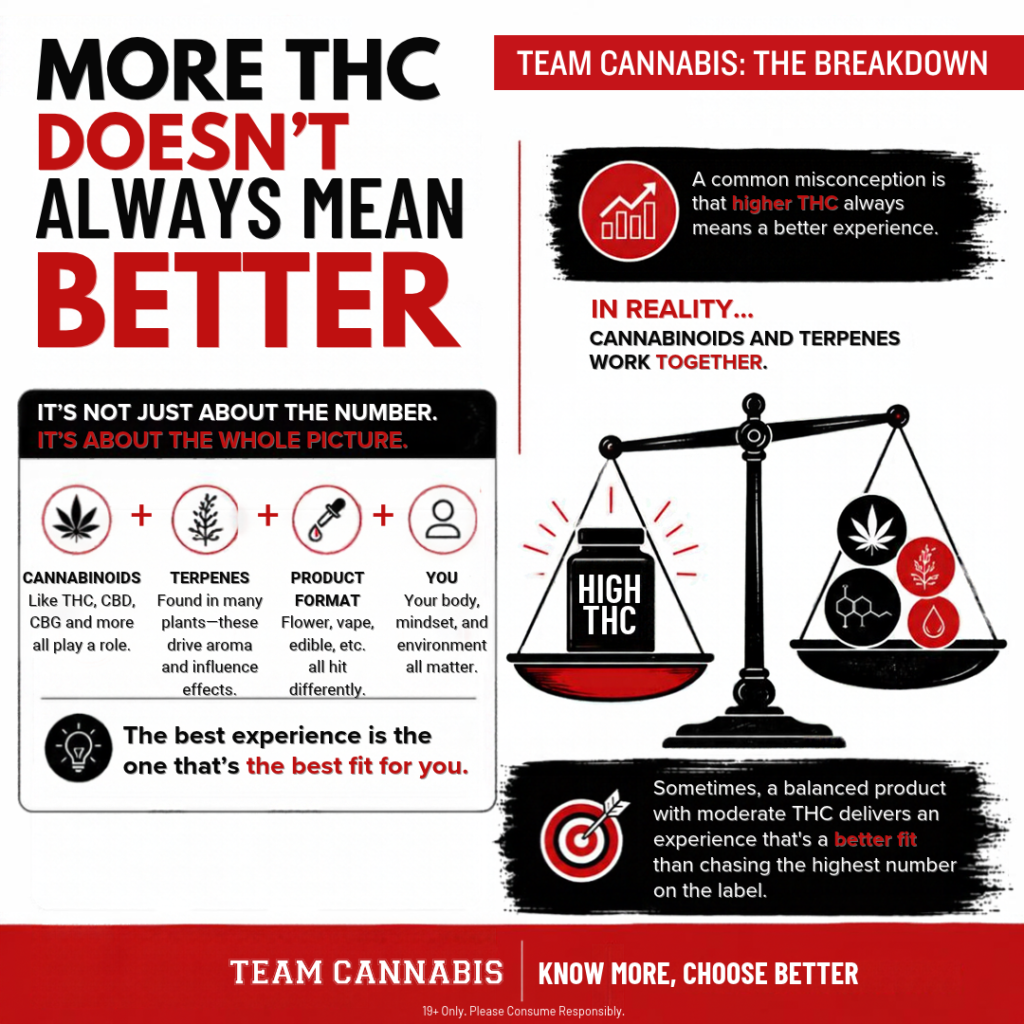
Why higher THC doesn’t always mean better
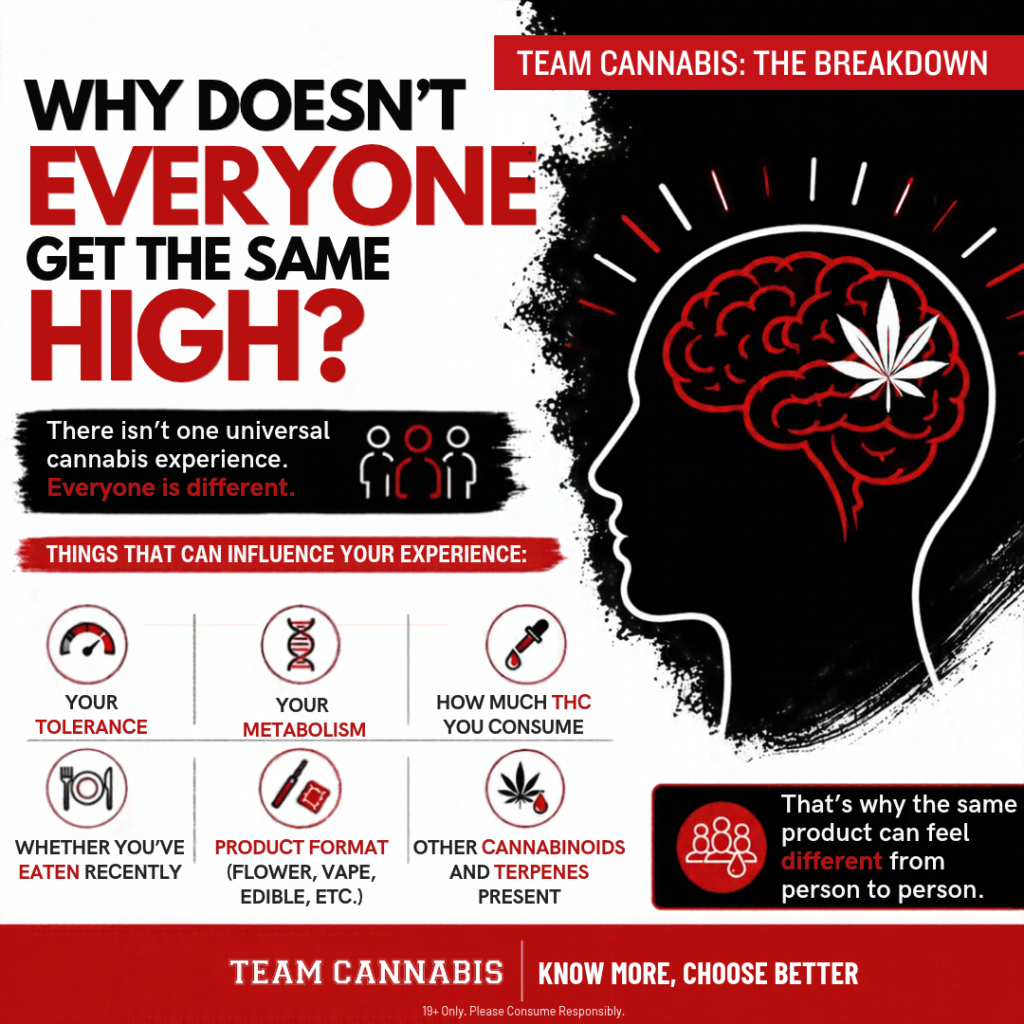
THC concentration is only one piece of the puzzle. Other contributing factors include:
Cannabinoid and terpene profiles.
Product format and extraction methods.
Freshness and storage conditions.
Individual tolerance, metabolism and amount consumed.
Higher THC levels can also increase impairment and the likelihood of unwanted effects.
Understanding how cannabis interacts with your body provides valuable context beyond the numbers on a product label.
Know more. Choose better.
19+ only. Please consume responsibly.