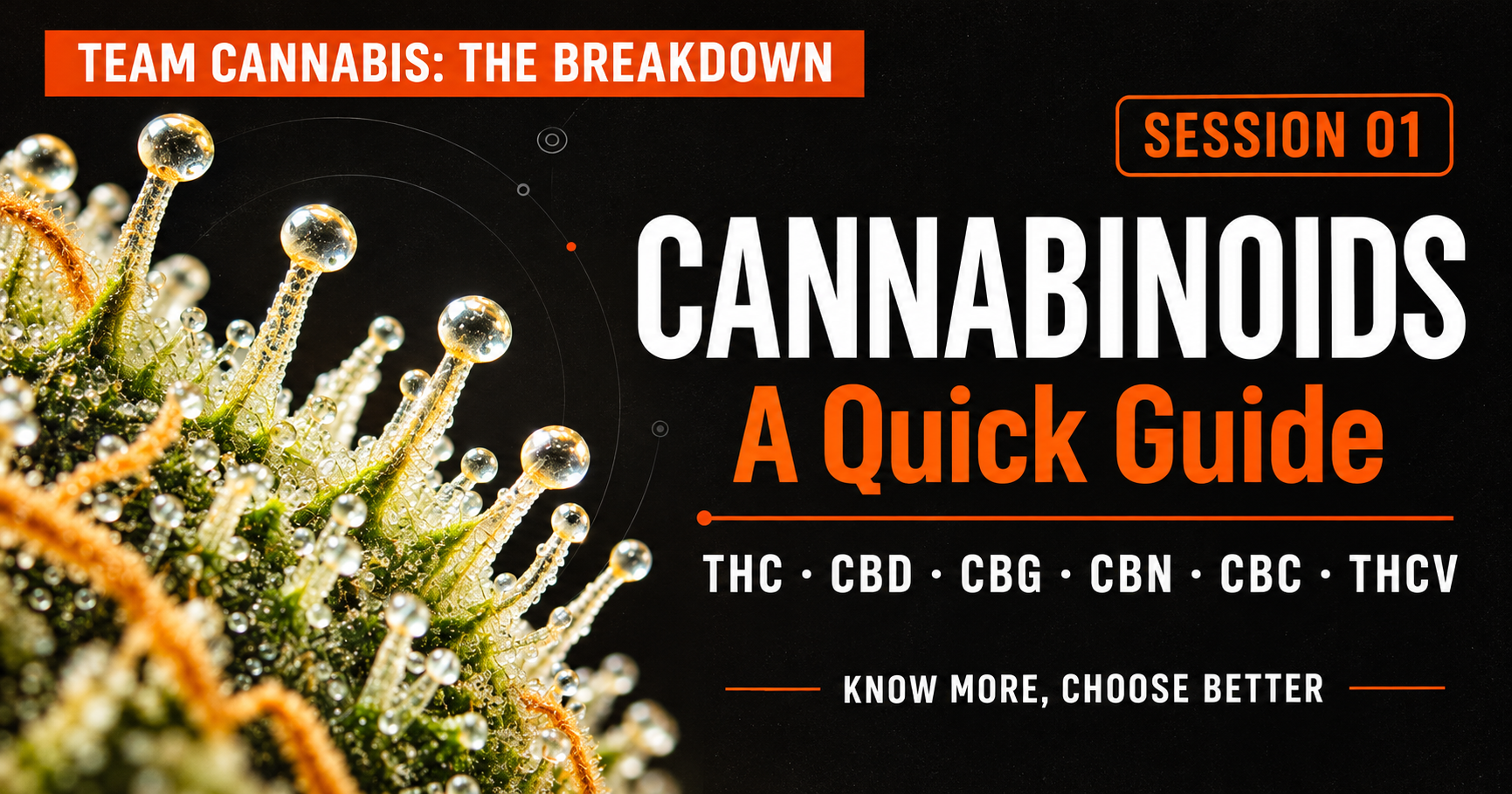
What Are Cannabinoids? A Guide to THC, CBD, CBG, CBN, CBC & THCV
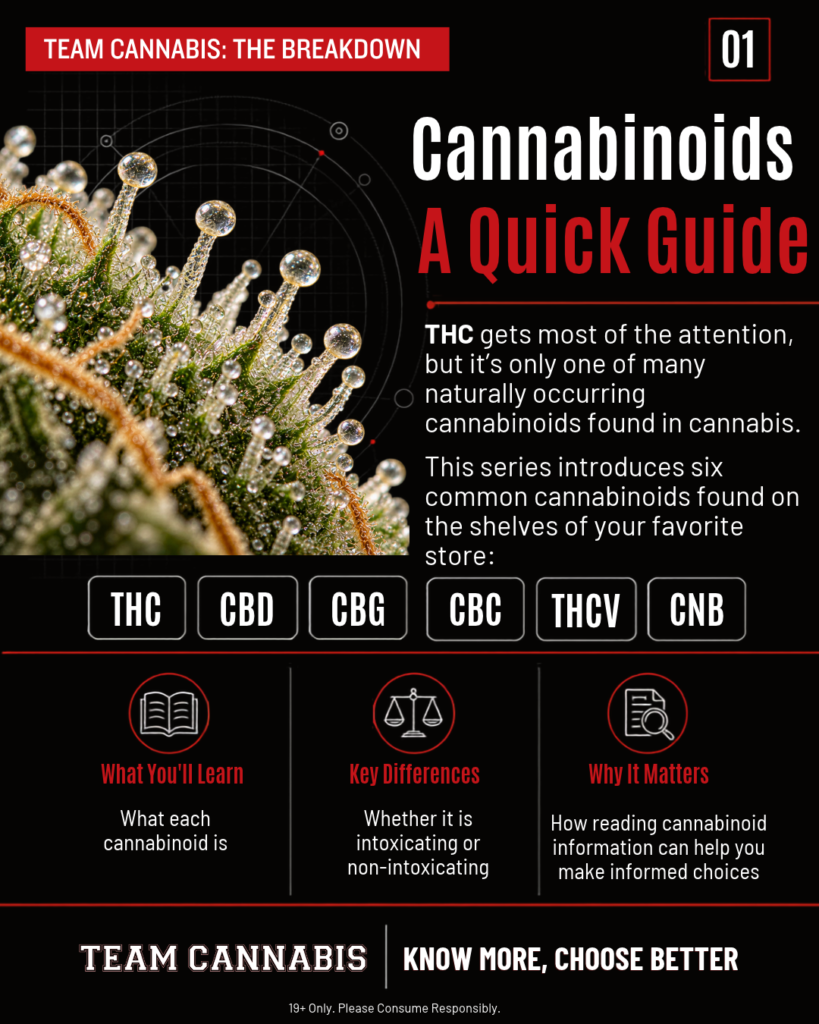
THC gets most of the attention, but there’s much more to cannabis than its THC percentage.
In Session #1 of The Breakdown, Team Cannabis introduces six naturally occurring cannabinoids and explains what makes them different.
What are cannabinoids?
Cannabinoids are chemical compounds found naturally in the cannabis plant that interact with the body’s endocannabinoid system and other biological pathways. While THC and CBD are the most familiar, there are many lesser-known cannabinoids worth understanding.
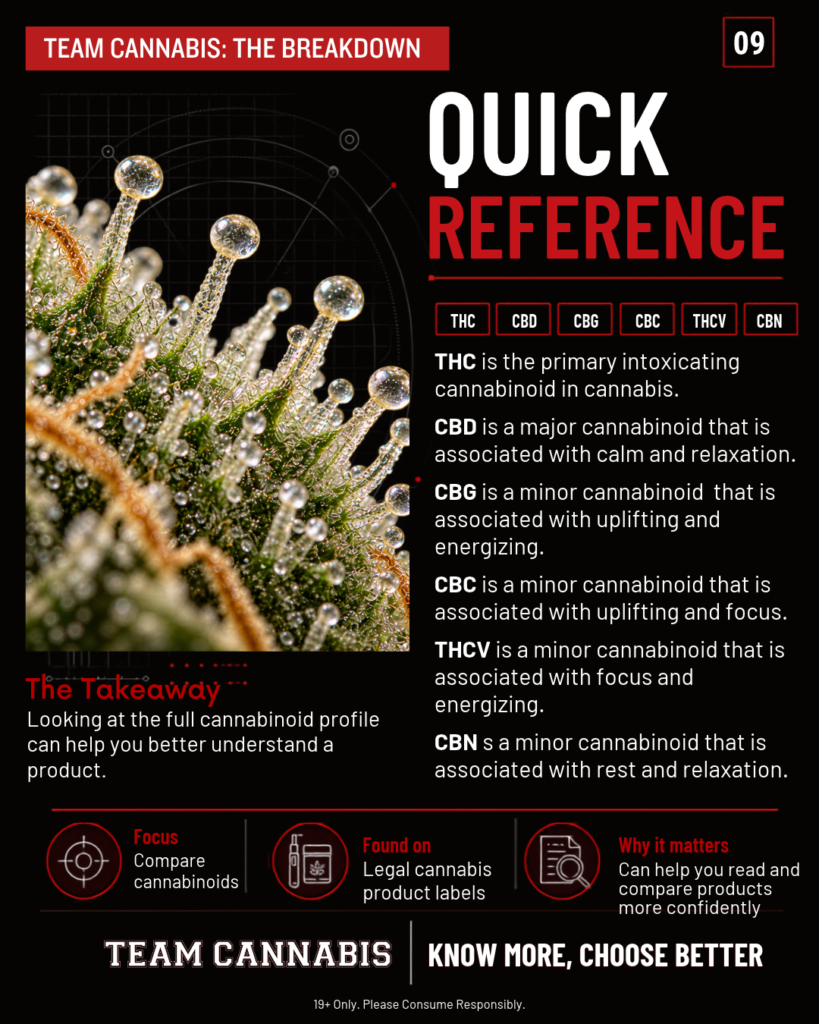
Six cannabinoids explained
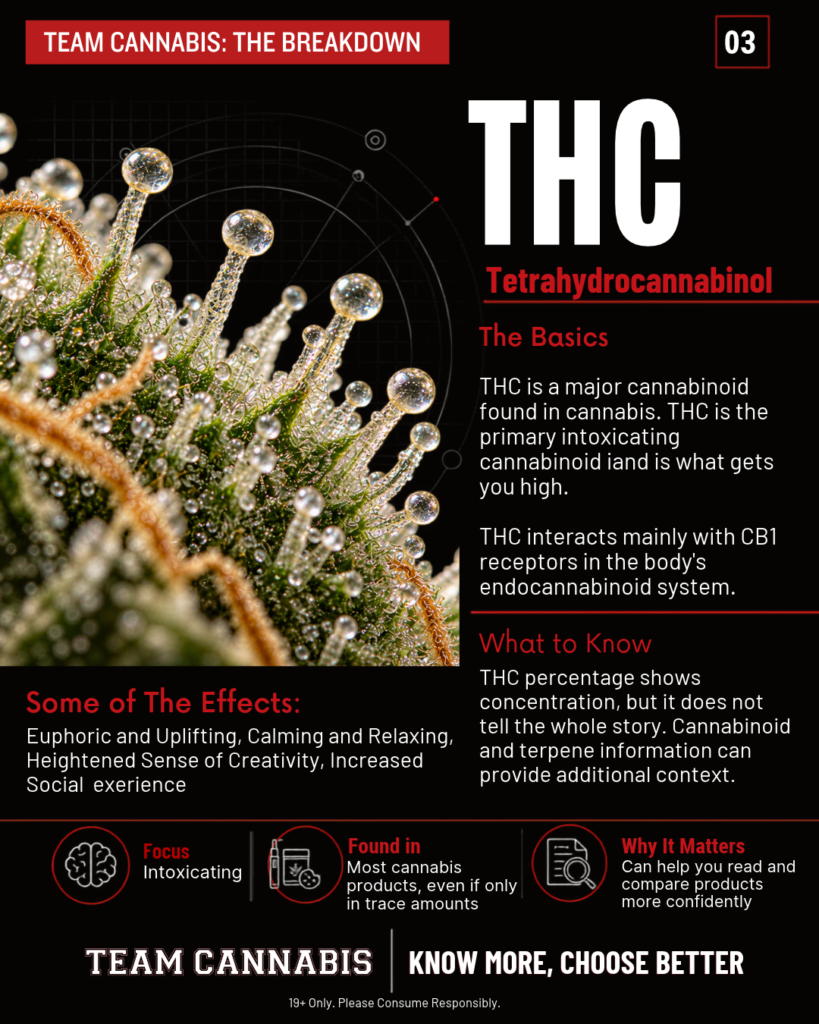
THC (Tetrahydrocannabinol): The primary intoxicating compound in cannabis, responsible for the experience commonly called a high.
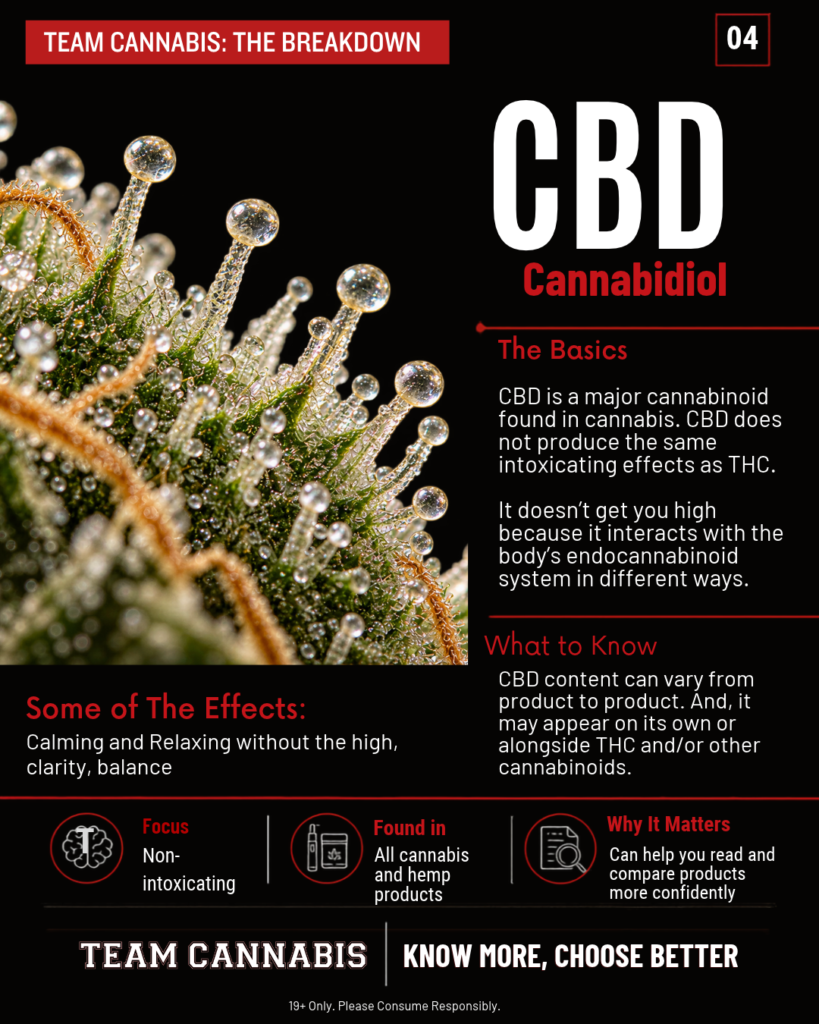
CBD (Cannabidiol): A non-intoxicating cannabinoid that may be present independently or alongside THC.
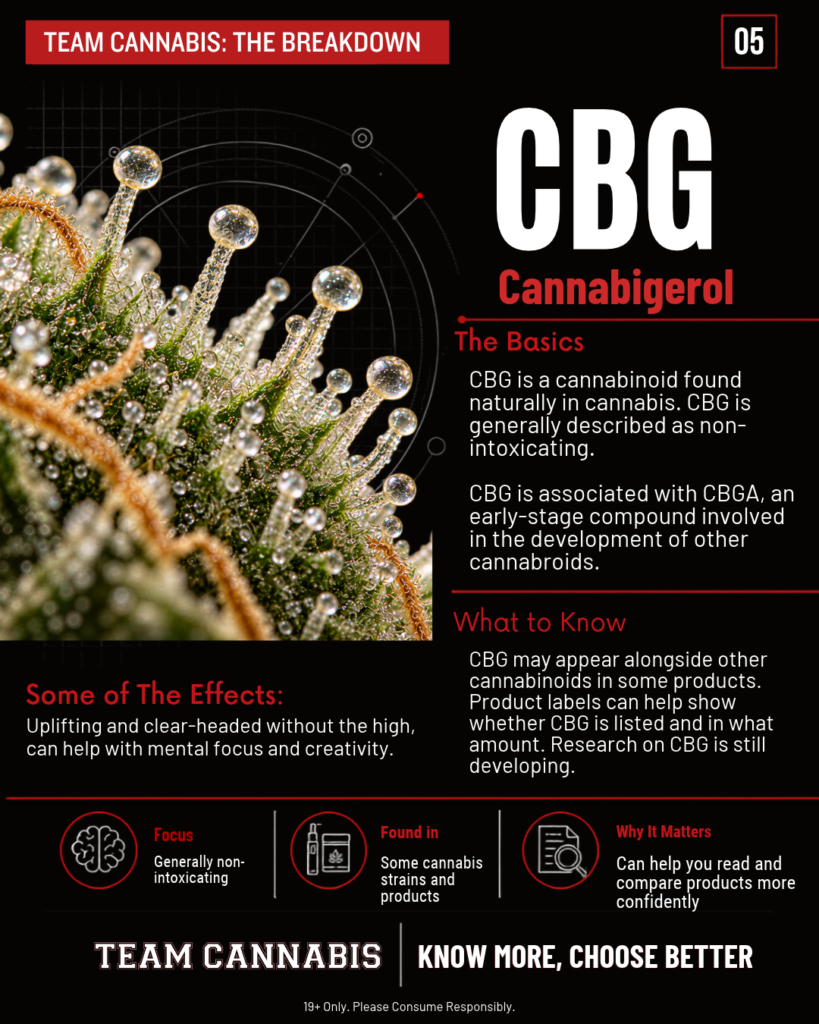
CBG (Cannabigerol): A generally non-intoxicating cannabinoid related to CBGA, a precursor involved in the formation of several other cannabinoids
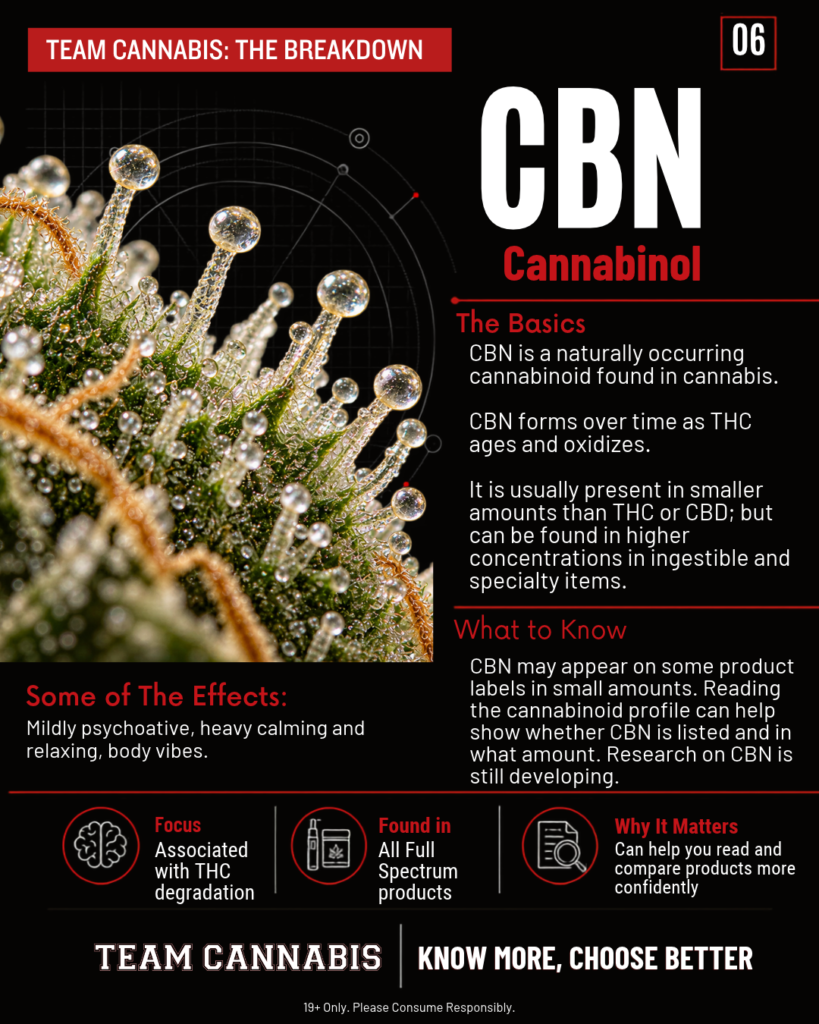
CBN (Cannabinol): A cannabinoid that can develop as THC ages and oxidizes.
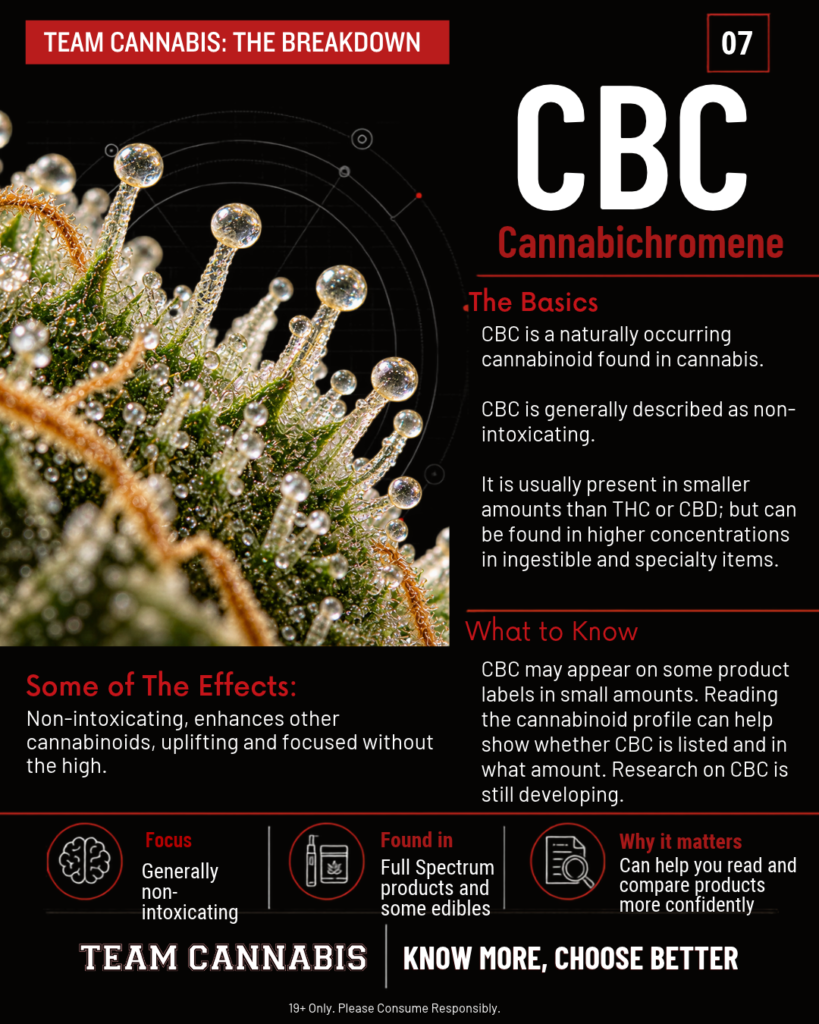
CBC (Cannabichromene): A generally non-intoxicating cannabinoid typically found in smaller concentrations.
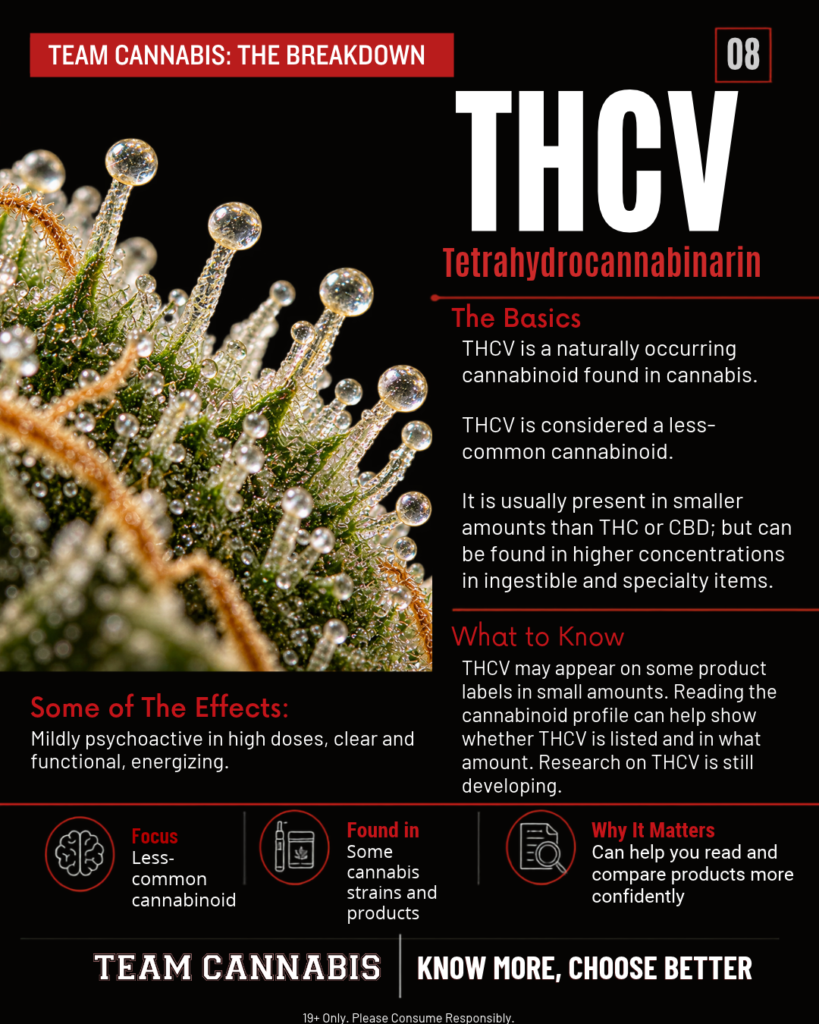
THCV (Tetrahydrocannabivarin): A lesser-known cannabinoid structurally related to THC, with distinct properties that researchers continue to investigate.
Beyond THC percentage
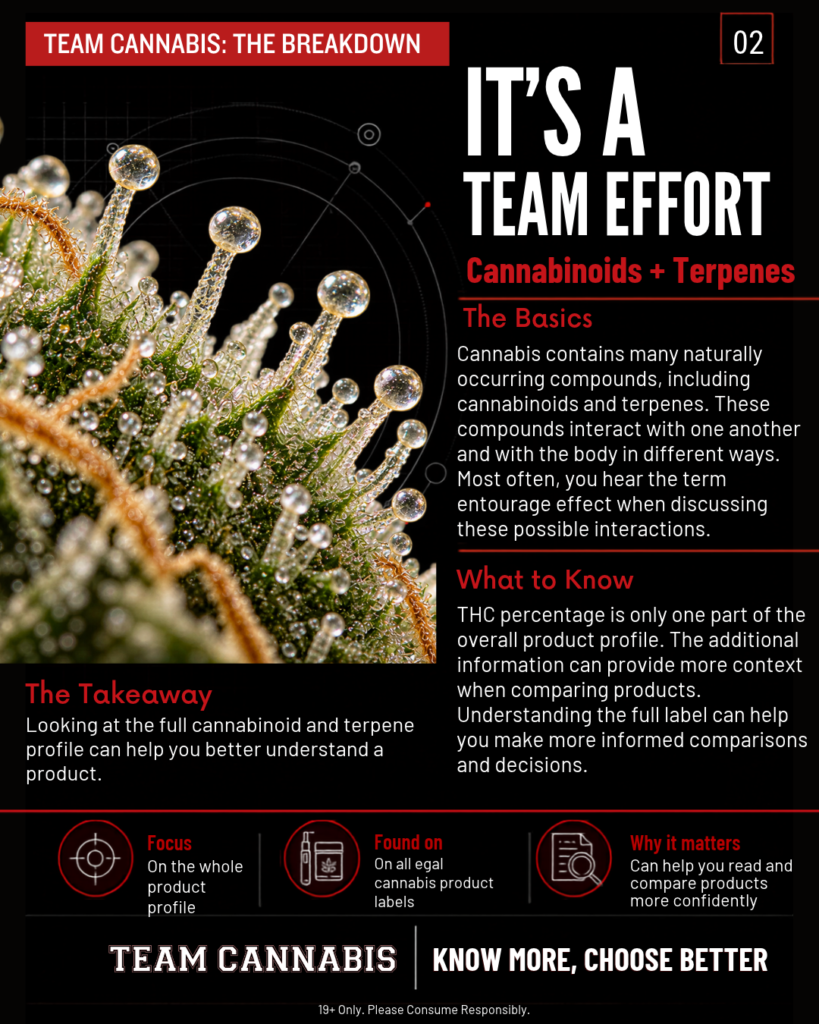
Cannabinoids and terpenes contribute to a cannabis product’s overall chemical profile. Their potential interactions are sometimes referred to as the entourage effect, although research is ongoing.
Understanding cannabinoid content, terpene profiles and product labels provides more context than THC percentage alone. Individual responses can vary, and research into minor cannabinoids remains limited.
At Team Cannabis in Vancouver, we believe cannabis education starts with understanding what’s actually inside the plant.